Walk through any Ghanaian market, church, or family compound and you'll see them — stamped on cloth, carved into stools, set in gold, printed on money. Adinkra symbols are the Akan people's visual language: each one compresses a proverb, a moral, or a whole philosophy of life into a single sign. The philosopher Kwame Anthony Appiah called them one of the means of "supporting the transmission of a complex and nuanced body of practice and belief."
This guide covers the sixteen symbols you're most likely to meet — what their Twi names literally say, what they mean, and the proverbs behind them — plus the true story of where Adinkra came from, and where you can still watch the cloth being stamped by hand.
The 16 symbols you'll meet everywhere
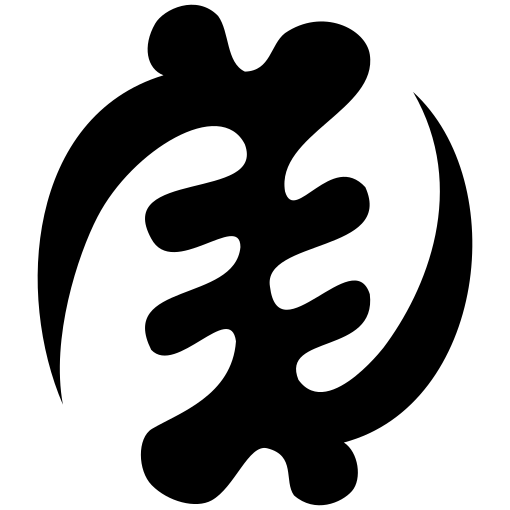
Gye Nyame
"Except God"The supremacy and omnipotence of God — fear none but God. By far the most popular symbol in Ghana; you'll even find it on the 200-cedi note.
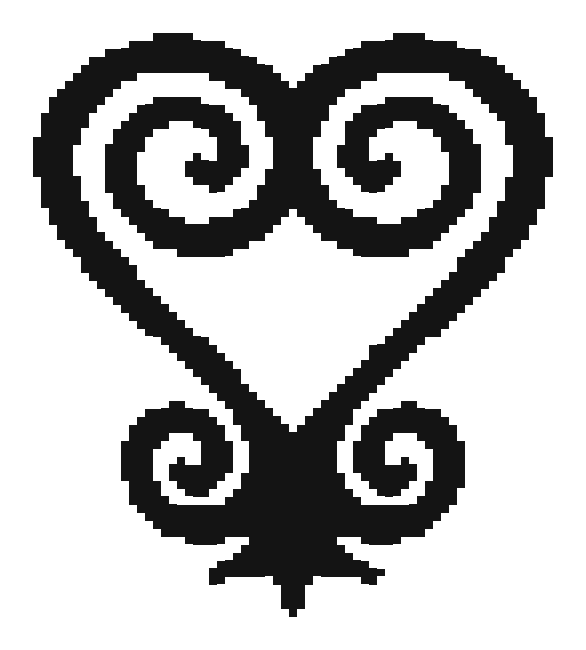
Sankofa
"Go back and get it"Learning from the past. From the proverb: "Se wo were fi na wosankofa a yenkyi" — it is not taboo to go back for what you forgot.

Adinkrahene
"Chief of the Adinkra symbols"Greatness, charisma, and leadership. The concentric design is said to have inspired the creation of other symbols.
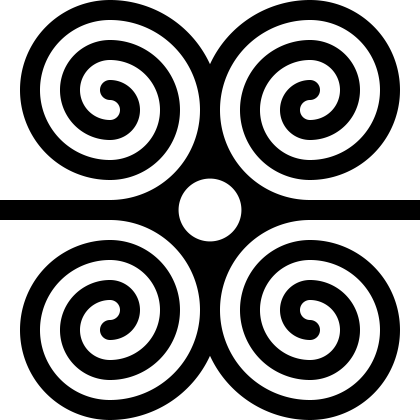
Dwennimmen
"Ram's horns"Humility paired with strength — the ram fights fiercely but submits humbly. A favourite for leaders.

Duafe
"Wooden comb"Beauty, cleanliness, and feminine grace. The comb was a prized possession of the Akan woman, used to comb and plait her hair.
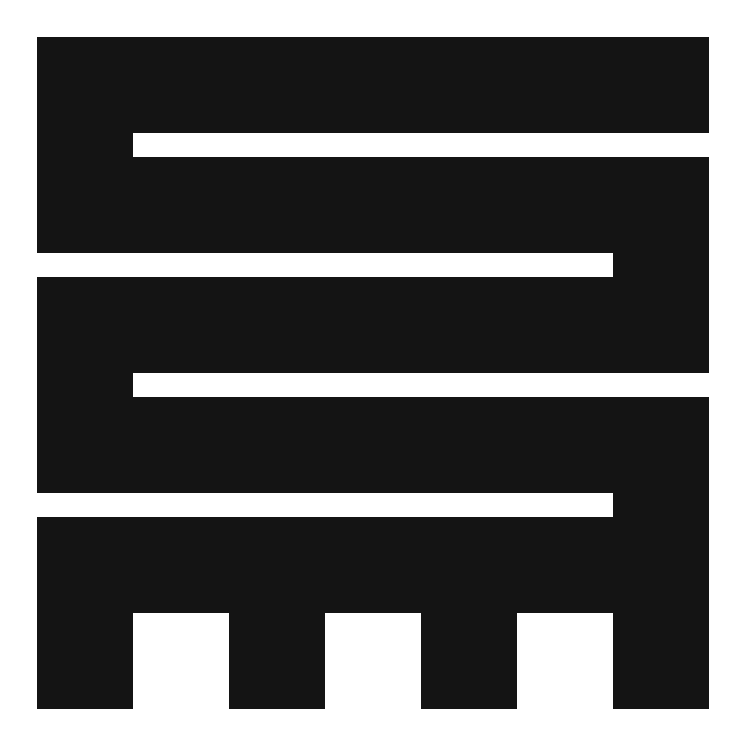
Nkyinkyim
"Twisting"Initiative, dynamism, and versatility. Life's road is full of twists and turns — this symbol honours those who adapt and keep moving.

Akoma
"The heart"Patience and tolerance. To have heart is to bear with others — a quiet symbol of endurance and goodwill.

Eban
"The fence"Safety, security, and the protection of home and family — the fence that guards what you love.

Bese Saka
"Cola nuts"Affluence, abundance, and unity. The cola nut — a prized trade crop — stands for the wealth that brings people together.

Nsoromma
"Child of the heavens"The guardianship of God. Behind it sits a saying: like the star, the child of the Supreme Being rests with God and does not depend on itself.
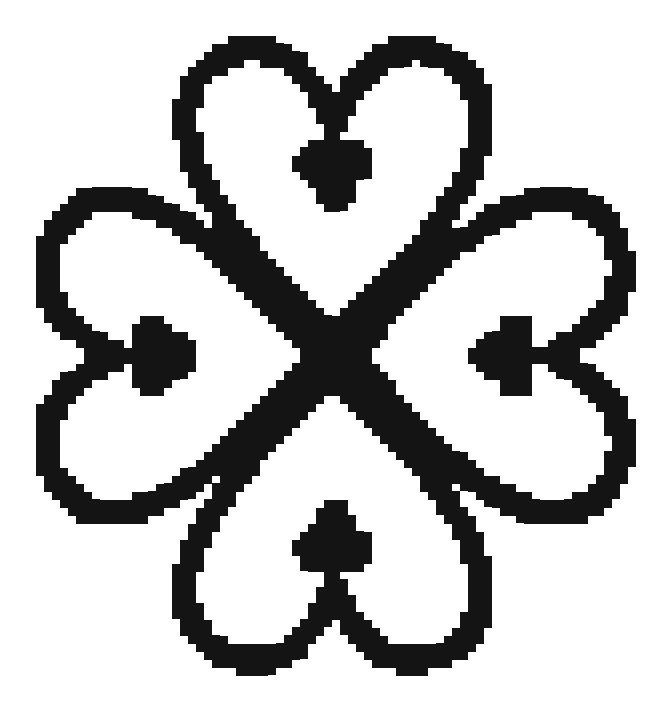
Nyame Dua
"Tree of God"God's presence and protection. The nyame dua is an altar — a post with a pot of offerings — placed in the courtyard of the home.

Funtunfunefu Denkyemfunefu
"Siamese crocodiles"Unity and democracy. The conjoined crocodiles share one stomach yet fight over food — a warning that infighting harms everyone.

Bi Nka Bi
"No one should bite another"Peace, harmony, and fair play — a call to avoid conflict and provocation in the community.
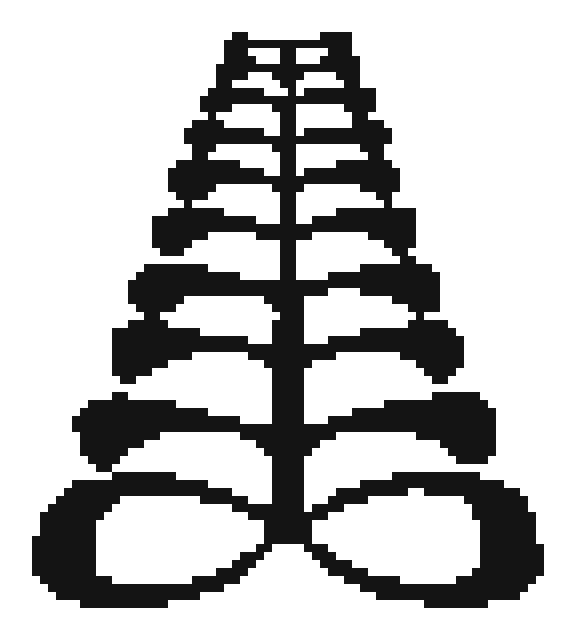
Aya
"The fern"Endurance, resourcefulness, and independence. The fern thrives where others can't — and the word also means "I am not afraid of you."

Nkonsonkonson
"Chain links"Unity and human connection — in unity lies strength. Each link holds because the others hold.

Denkyem
"The crocodile"Adaptability and cleverness. The crocodile lives in water but breathes air — at home in two worlds.
These sixteen are a doorway, not the whole house. The anthropologist Robert Sutherland Rattray recorded 53 symbols in 1927, and modern catalogues document well over a hundred — each with its own name, story, and proverb.
Where Adinkra comes from — the honest version
The popular story goes like this: the symbols were created by the Bono people of Gyaman (in today's Bono Region and Côte d'Ivoire), and named for their king, Nana Kwadwo Agyemang Adinkra. After Gyaman's defeat by the Asante in 1818–19, the craft — and the captured king's cloth — came to Kumasi, and Adinkra spread across the Akan world.
Scholars will tell you the truth is a little older and murkier. The British envoy Thomas Bowdich saw Adinkra cloth being made in Kumasi in 1817 — before that war — and brought a sample home; that cloth, stamped with fifteen symbols, still sits in the British Museum. Around Ntonso and Asokwa, the cloth is still known by its older name: ntintan, "stamped cloth." What nobody disputes is the meaning of the word itself — in Twi, adinkra is bound up with farewell and parting, which fits its first great use: cloth worn by royalty and spiritual leaders at funerals, the symbols speaking to the dead and the mourners at once.
How the cloth is made — and where to watch it happen
The present centre of traditional Adinkra production is Ntonso, about 20 km northwest of Kumasi. There, artisans still work the way their grandparents did:
- The dye: the dark aduro pigment is made by soaking, pounding, and boiling the inner bark and roots of the badie tree (Bridelia ferruginea) over a wood fire for hours, until it thickens.
- The stamps: carved from the shell of a calabash, each five to eight centimetres across, with a handle on the back and a slightly curved face.
- The printing: the stamp is dipped and pressed with a rocking motion, building rows of symbols across hand-woven cotton — traditionally undyed, red, dark brown, or black.
Go see it: Ntonso pairs naturally with Bonwire, the kente-weaving town — both make an easy day trip from Kumasi, and at Ntonso you can stamp a strip of cloth yourself to take home. Ask Kofi to build it into your itinerary.
Sankofa: the symbol the diaspora carried home
Of all the symbols, one has travelled furthest. Sankofa — drawn either as a bird turning its head backwards to take an egg from its back, or as a stylised heart — means go back and get it: the past is not behind you, it's a storehouse. For the African diaspora, that proverb landed like a homecoming. Sankofa now appears on jewellery, tattoos, T-shirts, and building facades across the Americas and Europe — a one-word answer to the question the Year of Return asked out loud: what did we leave behind, and can we go back for it?
It's why you'll see Sankofa everywhere in Ghana too — on the clothes of returning diasporans, in the craft markets of Accra and Kumasi, worked into gold. If one symbol could sum up the heritage journey, this is it.
Wearing Adinkra today
Adinkra long ago outgrew the funeral cloth. Today the symbols live on fashion, jewellery, architecture, logos, and skin — and choosing one has become a statement of identity as much as style. The golden rule is the one the cloth itself teaches: know what your symbol says before you wear it. You're putting a proverb on your body.
Our diaspora shopping guide walks through buying Adinkra cloth, kente, and gold in Ghana's markets. And if you want to arrive already wearing your heritage, Akonua — our sister brand — makes heritage wear for the diaspora, rooted in exactly these symbols and stories.
Questions everyone asks
What does Sankofa mean?
"Go back and get it" — the past holds things worth retrieving. Its proverb: it is not taboo to go back for what you forgot.
What is the most popular Adinkra symbol?
Gye Nyame, "except God." It's everywhere in Ghana — including on the 200-cedi banknote.
How many Adinkra symbols are there?
Rattray recorded 53 in 1927; modern catalogues list over 100 with variants. New ones are still occasionally created, the way new proverbs are coined.
Where can I see Adinkra being made?
Ntonso, near Kumasi — the heart of traditional production, where visitors can watch the stamping and try it themselves.
Is it okay for visitors to wear Adinkra?
Yes — Ghanaians are famously glad to share their culture. Just learn your symbol's meaning first; wearing it knowingly is the respect.
Keep exploring
Adinkra is one thread in a much bigger cloth. Our country guide explains the Ghana behind the trip, and our shopping guide covers kente, gold, and the markets. Or start planning — the symbols make a lot more sense when you're standing in front of them.
Symbol meanings follow the standard references — Rattray's 1927 record and the British Museum's Adinkra collections. Symbol images via Wikimedia Commons: public domain / CC0, except Sankofa, Eban and Nkyinkyim © Pablo Busatto, CC BY-SA 4.0.
🤖 Plan my trip with Kofi